This web browser is not supported. Use Chrome, Edge, Safari, or Firefox for best results.
XWord Info Home
Previous | Next | Fritz Juhnke author page | Sep 2026 grids | Solve & Print | PDF | FAQ | Pay
New York Times, Saturday, September 5, 2026
Nay sayers
This puzzle:
Rows: 15, Columns: 15 Words: 72, Blocks: 25 Missing: {FJQVX} Spans: 4 Grid has both 90- and 180-degree symmetry. This is puzzle # 3 for Mr. Juhnke. Grid flow: 104.7 Saturday freshness: 2%
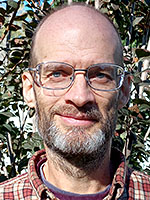
Fritz Juhnke notes:
When I construct a crossword, one of my goals is to submit a high-quality original clue for each entry. If this sounds insane to you, ... read more
Jim Horne notes:
Fritz Juhnke, who invented the Flow calculation, comes in with a flow value in the 99th percentile.
1 S | 2 C | 3 H | 4 M | 5 O | 6 O | 7 Z | 8 E | 9 D | 10 M | 11 A | 12 G | 13 M | 14 A |
|
15 W | H | O | A | T | H | E | R | E | 16 B | L | E | A | T |
|
17 A | L | L | T | H | O | S | E | A | 18 G | A | I | N | S | T |
19 N | O | L | T | E | 20 T | A | L | L | 21 S | E | S | H |
||
22 K | E | Y | 23 R | 24 O | A | D | 25 E | 26 N | T | R | E | E |
||
27 W | 28 A | S | H | 29 E | 30 T | N | A | 31 A | M | T |
||||
32 I | 33 D | O | L | 34 M | 35 O | R | E | 36 D | 37 A | L | A | I |
||
38 C | O | O | T | 39 I | E | S | 40 A | 41 N | A | H | E | I | M |
|
42 E | N | D | A | T | 43 L | 44 U | L | U | 45 E | L | L | E |
||
46 P | O | M | 47 L | 48 I | O | N | 49 L | 50 A | M | E | ||||
51 A | T | O | 52 L | L | S | 53 C | 54 A | L | L | 55 C | 56 S | 57 I |
||
58 L | I | M | O | 59 P | 60 L | O | T | 61 L | 62 E | T | O | N |
||
63 A | R | E | N | 64 T | Y | O | U | S | 65 P | E | C | I | A | L |
66 C | O | N | G | A | 67 S | T | E | A | L | H | O | M | E |
|
68 E | N | T | E | R | 69 S | H | A | K | E | O | N | I | T |
© 2026, The New York Times9/5/26 ( No. 28,060 )
Across
1
Made chitchat : SCHMOOZED
10
Underground rock : MAGMA
15
"Slow down a second!" : WHOATHERE
16
What you might hear when you get someone's goat? : BLEAT
17
Nay sayers : ALLTHOSEAGAINST
19
Actor Nick of "The Prince of Tides" : NOLTE
20
One way to stand : TALL
21
Hang time, for short? : SESH
22
Important : KEY
23
Journey, so to speak : ROAD
25
Access, as to an elite network : ENTREE
27
"___ ME" (humorous "sign") : WASH
29
European landmark whose name begins with an "A" in classical literature : ETNA
31
Reduced price? : AMT
32
Revered one : IDOL
34
"Keep on going!" : MORE
36
Word in a Tibetan leader's title : DALAI
38
"Infection" common among schoolkids : COOTIES
40
California city bisected by Interstate 5 : ANAHEIM
42
Not continue beyond : ENDAT
43
Stunner : LULU
45
Cette femme : ELLE
46
Toy popularized by Queen Victoria, familiarly : POM
47
___ dance (Lunar New Year tradition) : LION
49
Shiny material : LAME
51
Annular reefs : ATOLLS
53
Stock market option : CALL
55
TV drama whose past guest stars have included Taylor Swift and Justin Bieber : CSI
58
Its license plate might read "FOR HIRE" : LIMO
59
Land, marked : PLOT
61
Held the elevator door for, say : LETON
63
Sarcastic response to boasting : ARENTYOUSPECIAL
66
Carnival line? : CONGA
67
Score sneakily : STEALHOME
68
"The door's open!" : ENTER
69
Conclude an agreement, say : SHAKEONIT
Down
1
Ritzy : SWANK
2
Luxury fashion house based in Paris : CHLOE
3
Incident so dramatic it feels like a movie : HOLLYWOODMOMENT
4
Apt name for a yoga instructor? : MATT
5
"Our best thought came from ___": Ralph Waldo Emerson : OTHERS
6
"Found you!" : OHO
7
Cracker alternative to Ritz : ZESTA
8
Mobile library? : EREADER
9
Cope : DEAL
10
Future manager's goal, for short : MBA
11
Most-celebrated celebrities : ALIST
12
Primary follower : GENERALELECTION
13
Thing you may regret hitting "Reply All" to : MASSEMAIL
14
When it happened : ATTHETIME
18
Valley with gentle slopes : GLEN
24
"I can't catch a break!" : OHME
26
Bubkes : NADA
28
20-Across, en español : ALTA
30
Green-winged water bird : TEAL
32
Stunning attraction at a winter festival, maybe : ICEPALACE
33
Clothing tag warning : DONOTIRON
35
Seat of one European monarchy : OSLO
37
Tongue-in-cheek interjection akin to "Told ya ..." : AHEM
39
"___ turn out fine" : ITLL
41
Like the 18th Amendment, nowadays : NULL
44
Boorish : UNCOUTH
48
Game on a car trip : ISPY
50
Form of a gene : ALLELE
52
The sound that concludes "The Sound and the Fury" : LONGE
54
Befuddled : ATSEA
56
"We're alike in that way" : SOAMI
57
Cove : INLET
60
Stock market woe : LOSS
62
Diminishing return? : ECHO
64
Waterproofing material for a sail, once : TAR
65
Lahore is here: Abbr. : PAK
Answer summary:
4 unique to this puzzle.
Log in or purchase a subscription to view an analysis of this puzzle.
Found bugs or have suggestions? Please let us know.
Like this puzzle? Please share this page on social media to help spread the word about XWord Info. Thanks!